
You use your dryer all the time, and a blocked vent can quietly cause bigger problems like longer drying times, higher energy bills, and safety risks. This article helps you spot nine clear signs of a clogged dryer vent so you can decide whether to clean it yourself or hire a pro in Colorado Springs.
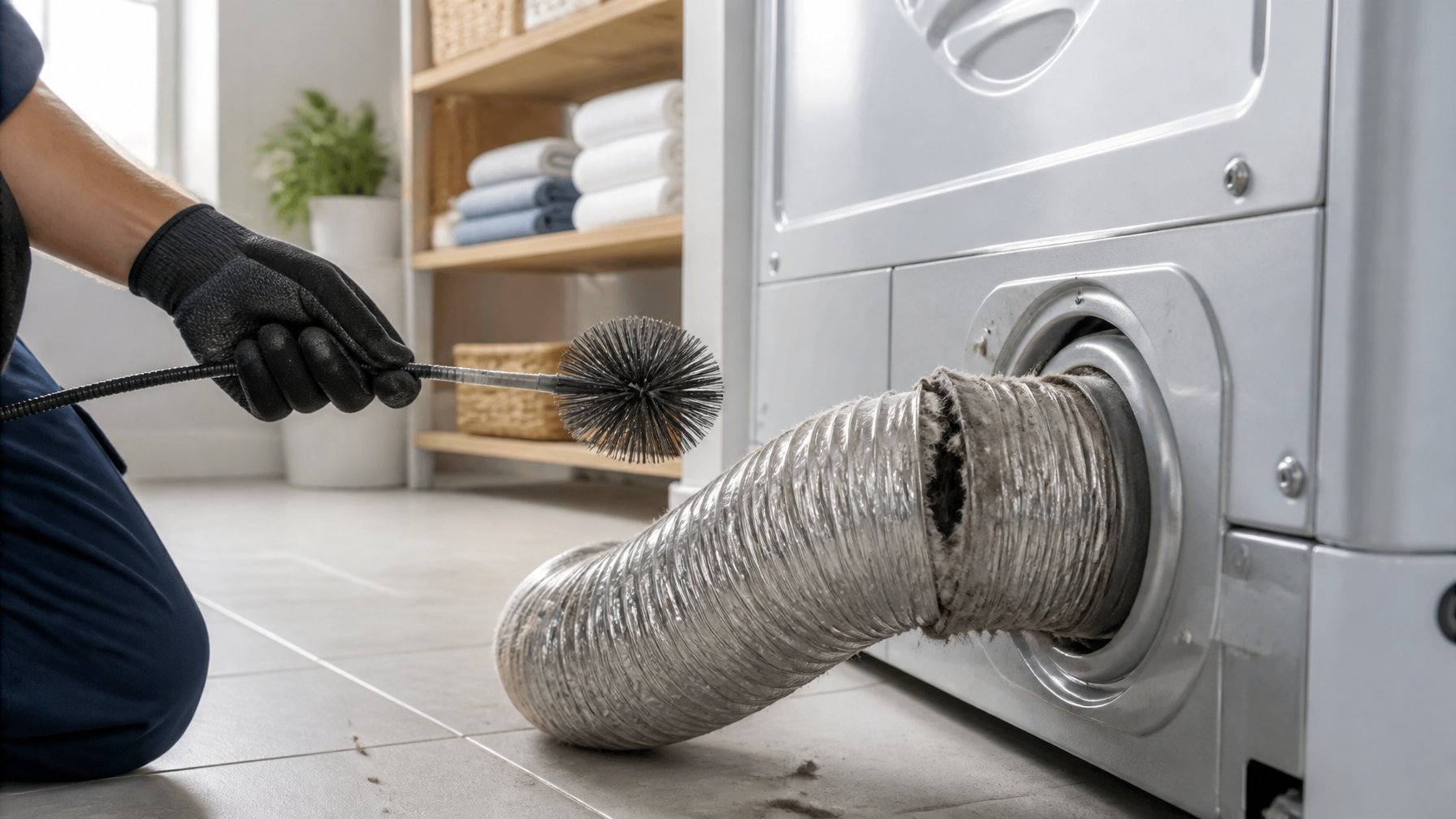
They will learn how to compare cleaning options, what questions to ask a service, and which tradeoffs matter for cost and safety. The guidance stays practical and local, so homeowners can pick the right approach for their home and avoid costly repairs.
1) Clothes taking multiple cycles to dry

If clothes need two or more cycles to feel dry, the vent may be blocked. They should be dry after one full cycle for a typical load. Compare drying time now to when the dryer was new or to the dry setting label.
He or she should check lint buildup in the dryer trap and listen for weak airflow at the outside vent. Ask whether the vent runs long or has many bends; longer runs and tight bends reduce airflow and raise drying time.
Weigh the tradeoff between DIY vent cleaning and hiring a pro. A homeowner can remove lint from the trap and accessible duct ends, but if airflow still seems poor, a professional cleaning service can inspect longer ducts and the exterior vent. See dryer vent cleaning for service options and tips.
2) Drying area and lint trap covered in fine lint
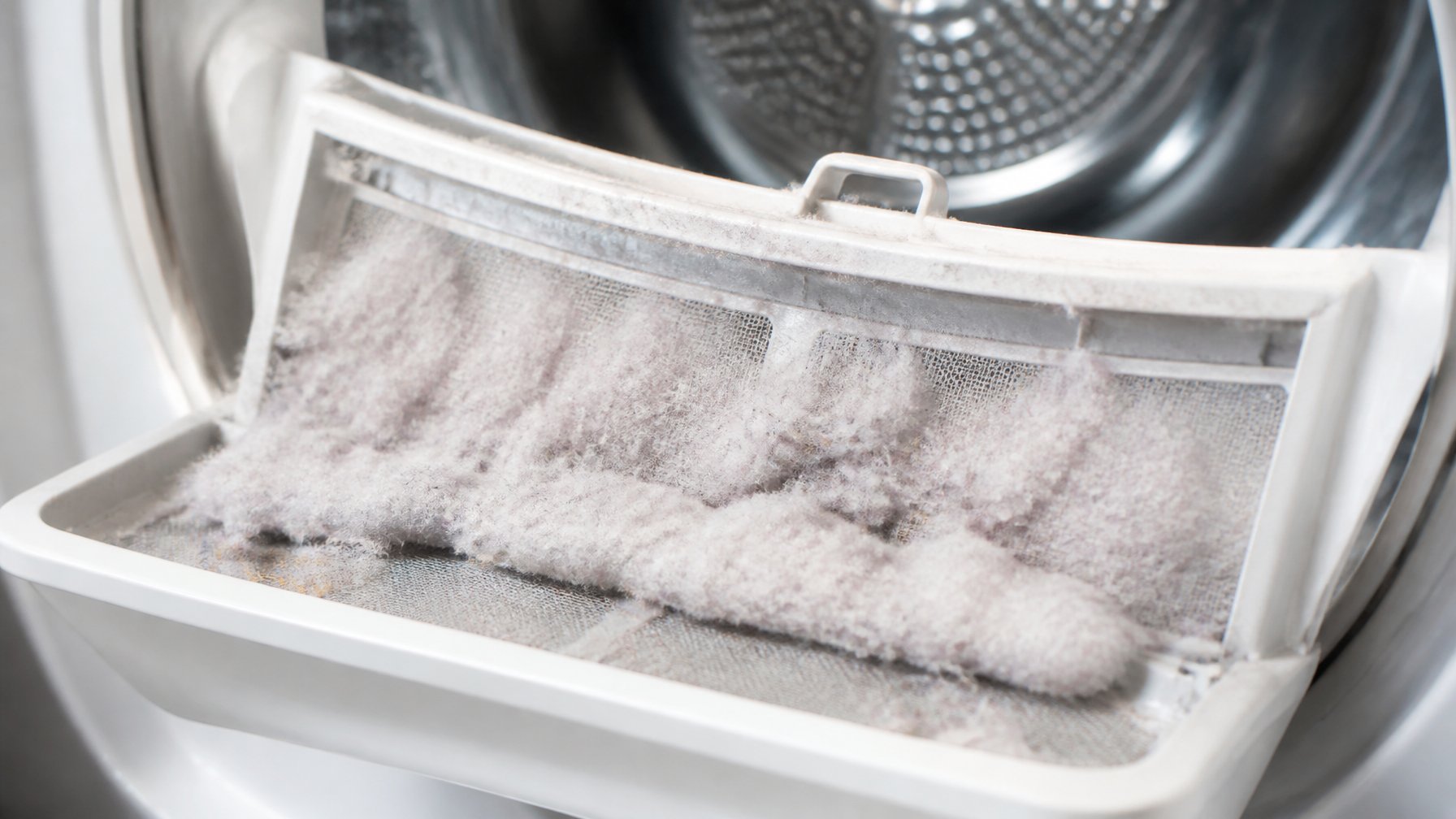
If the dryer drum rim, door seal, and lint trap collect a layer of fine, powdery lint after one cycle, it may signal restricted airflow. They should show only coarse lint from clothes, not a dusty coating that spreads easily when touched.
Homeowners should compare lint amounts between loads and note whether synthetic fabrics shed more fine dust. Ask if the vent was cleaned recently and weigh the tradeoff between DIY brushing and hiring a pro for a full vent inspection. Check a dryer vent cleaning service or maintenance guide for steps and safety tips.
They can also test by running an empty cycle and watching how quickly lint builds. If the fine lint persists, it often points to a partial blockage farther down the duct that reduces suction and forces tiny fibers out at the trap.
3) Burning smell during or after dryer use

A burning smell during or right after dryer use often means lint is trapped and heating elements are getting too hot. They should compare the smell to burnt fabric, plastic, or rubber to narrow the source. If the odor appears only when drying certain items, it could be lint buildup in the drum or vent that heats unevenly.
They should ask how long it takes for the smell to start and whether the dryer exhaust feels unusually warm at the vent outside. A strong or persistent odor is a tradeoff: continuing to use the dryer risks fire and higher energy bills, while stopping to inspect or hire a professional adds time and cost.
Homeowners can check the lint trap, feel the outside vent for airflow, and visually inspect the vent hood for blockage. For help finding a trusted vent cleaning service, see dryer vent cleaning.
4) Back of dryer and exhaust hose hot to the touch
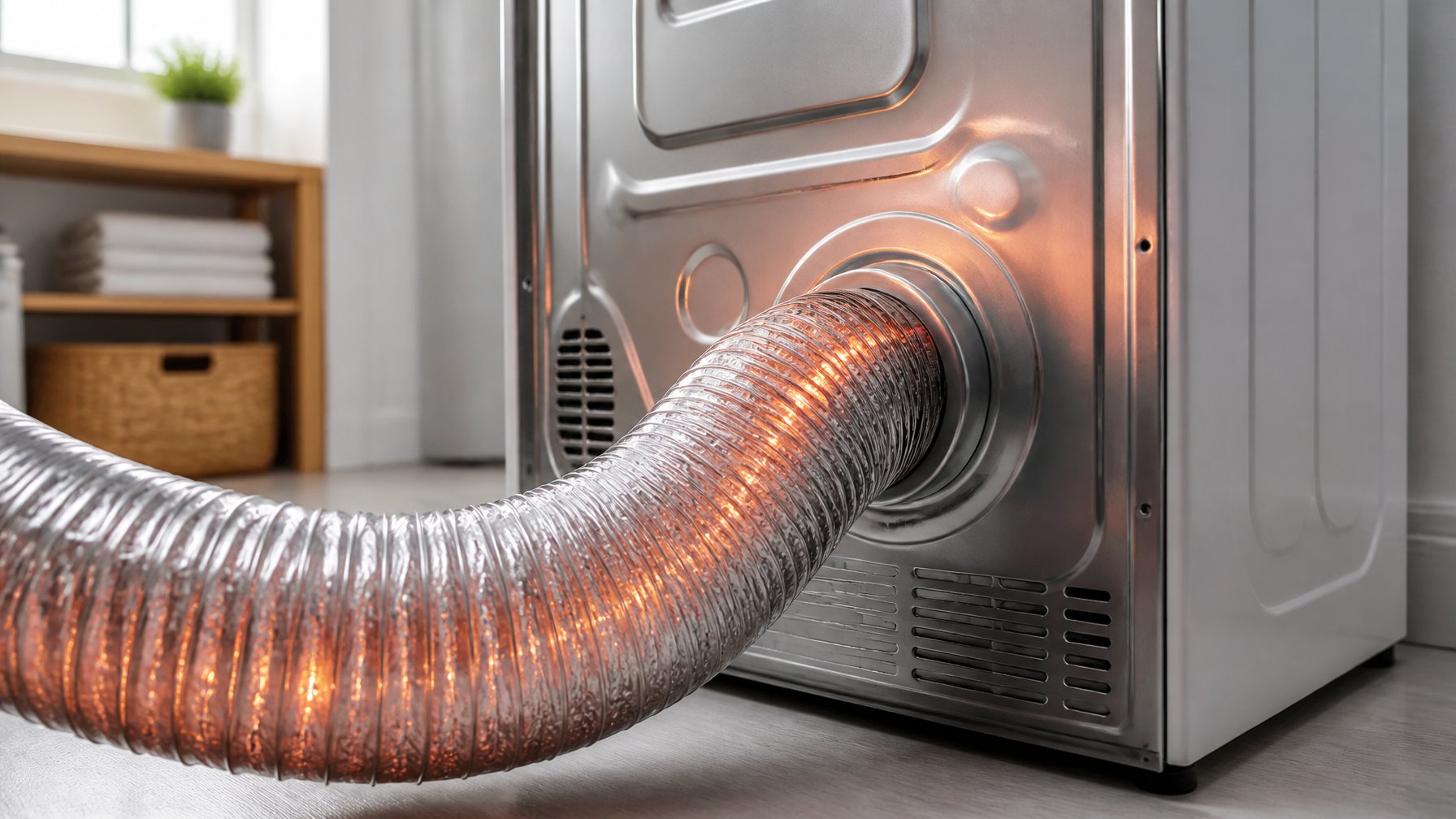
If the dryer feels hot at the back or the exhaust hose is hot, it may mean air can't flow well. The dryer has to push hot, moist air out; when vents are blocked, heat builds up at the outlet and the hose warms up more than usual.
They should compare the back temperature to the rest of the dryer and to normal runs. Ask whether the exhaust hood outside opens fully during a cycle and whether lint has collected at the hood. A tradeoff to consider is short-term cleaning versus hiring a vent service; cleaning the visible hose is cheap but may not clear long ductwork.
Homeowners can check the exhaust flap outside and feel for airflow while the dryer runs. For professional help or more tips, visit dryer vent cleaning.
5) Dryer making labored or louder-than-normal noises

If the dryer sounds strained, rattles, or squeals more than usual, it may point to a vent blockage. They should compare current sounds to how the dryer sounded when it ran smoothly, and note if noises grow worse during longer cycles.
They should check the lint trap, the exhaust vent outside, and the flexible duct for kinks or crushed sections. Ask whether the vent outlet is partially blocked by nests, debris, or lint build-up, because clearing it often reduces noise and improves airflow.
If the dryer still sounds loud after basic checks, weigh the tradeoff between DIY cleaning and hiring a pro. For more help with vent cleaning services, visit the dryer vent cleaning page.
6) Visible kinking or crushing of the exterior vent hose
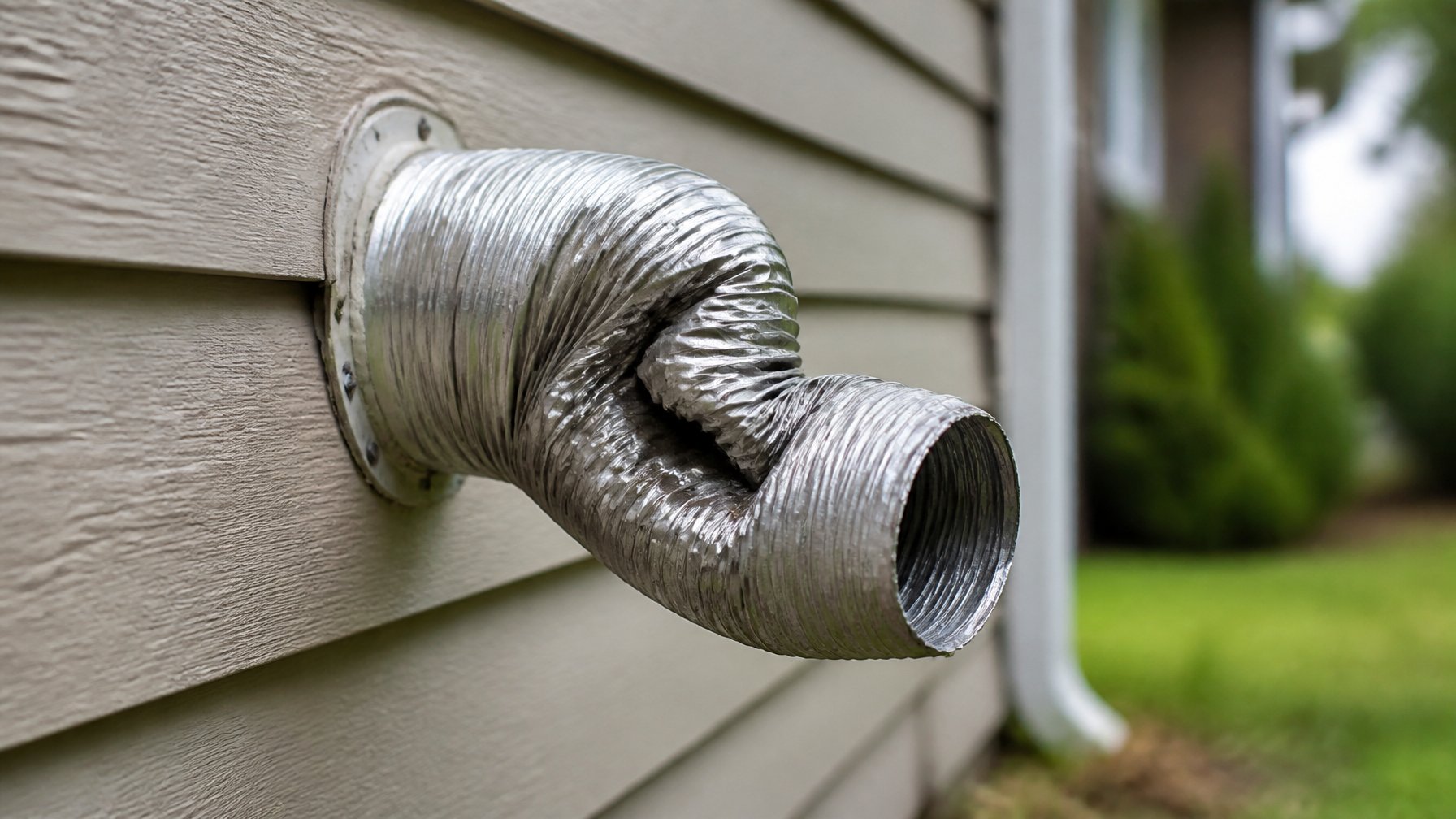
If the vent hose outside looks bent, pinched, or flattened, it can trap lint and cut airflow. Homeowners should compare the hose shape to a smooth, round hose and note any areas that stay collapsed even when the dryer runs.
Ask whether the hose material is flexible foil, semi-rigid metal, or rigid metal. Rigid metal resists kinks best but may need different fittings; trade off flexibility for durability when choosing a replacement.
Check the route from the dryer to the exterior for tight bends or weight from other items that press on the hose. If the hose runs through an attic or crawl space, make sure it has support and no sharp bends; see dryer vent cleaning for service options.
7) Airflow weak at the exterior vent outlet
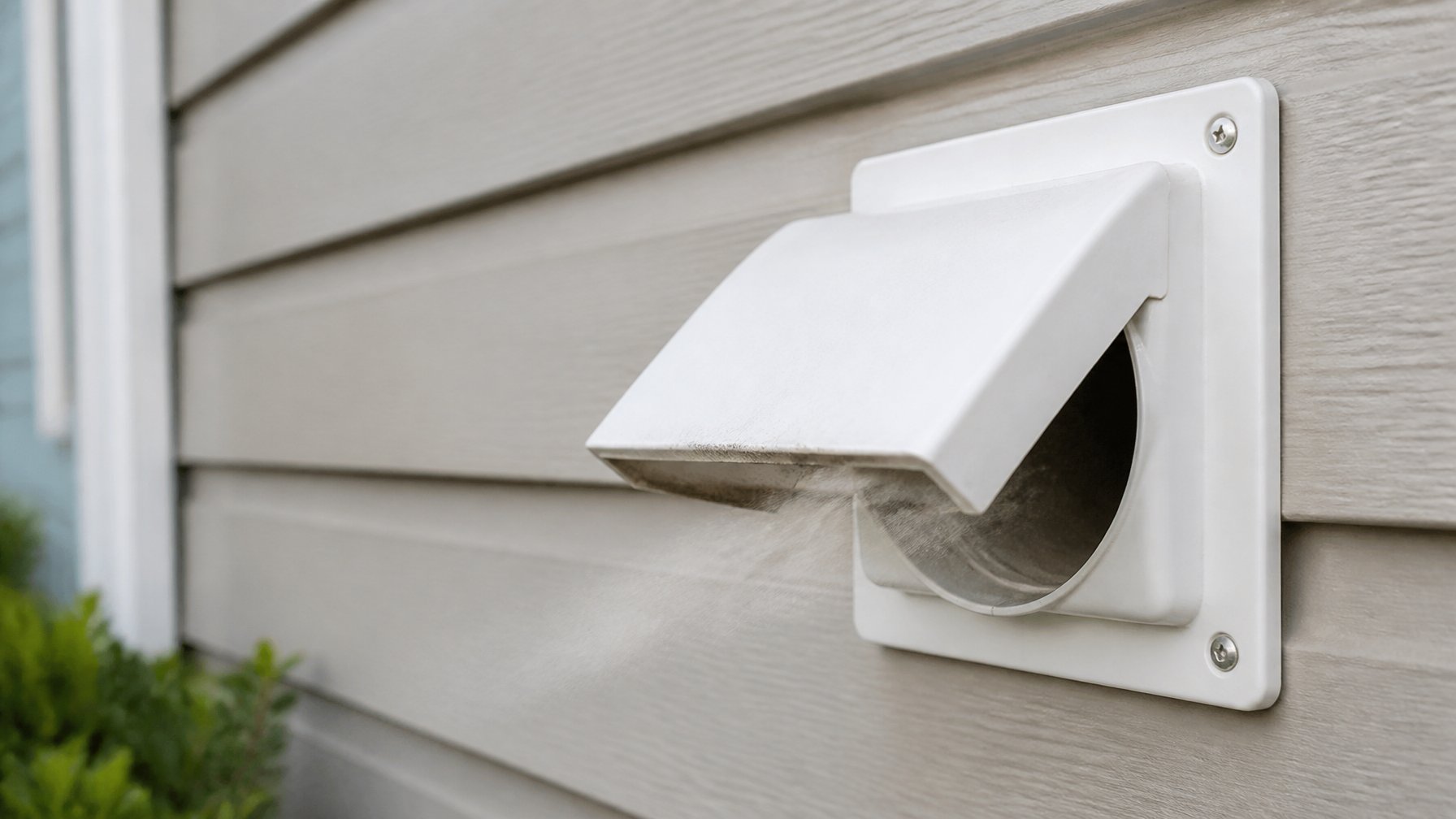
They should stand outside while a dryer runs and feel the airflow at the vent outlet. Compare the airflow strength to a neighbor’s or another home appliance vent; weak flow usually signals lint buildup or a crush in the duct. Ask whether the flap opens fully; a partially stuck flap can cut flow even if the duct is clear.
They should note if airflow varies with load or cycle. If flow drops during certain cycles, the heat or moisture might be condensing and blocking the line. Weigh the tradeoff between a DIY brush clean and hiring a pro for a full duct inspection.
For more help, they can visit dryer vent cleaning service to learn about inspection and cleaning options.
8) Excessive humidity or condensation in the laundry room
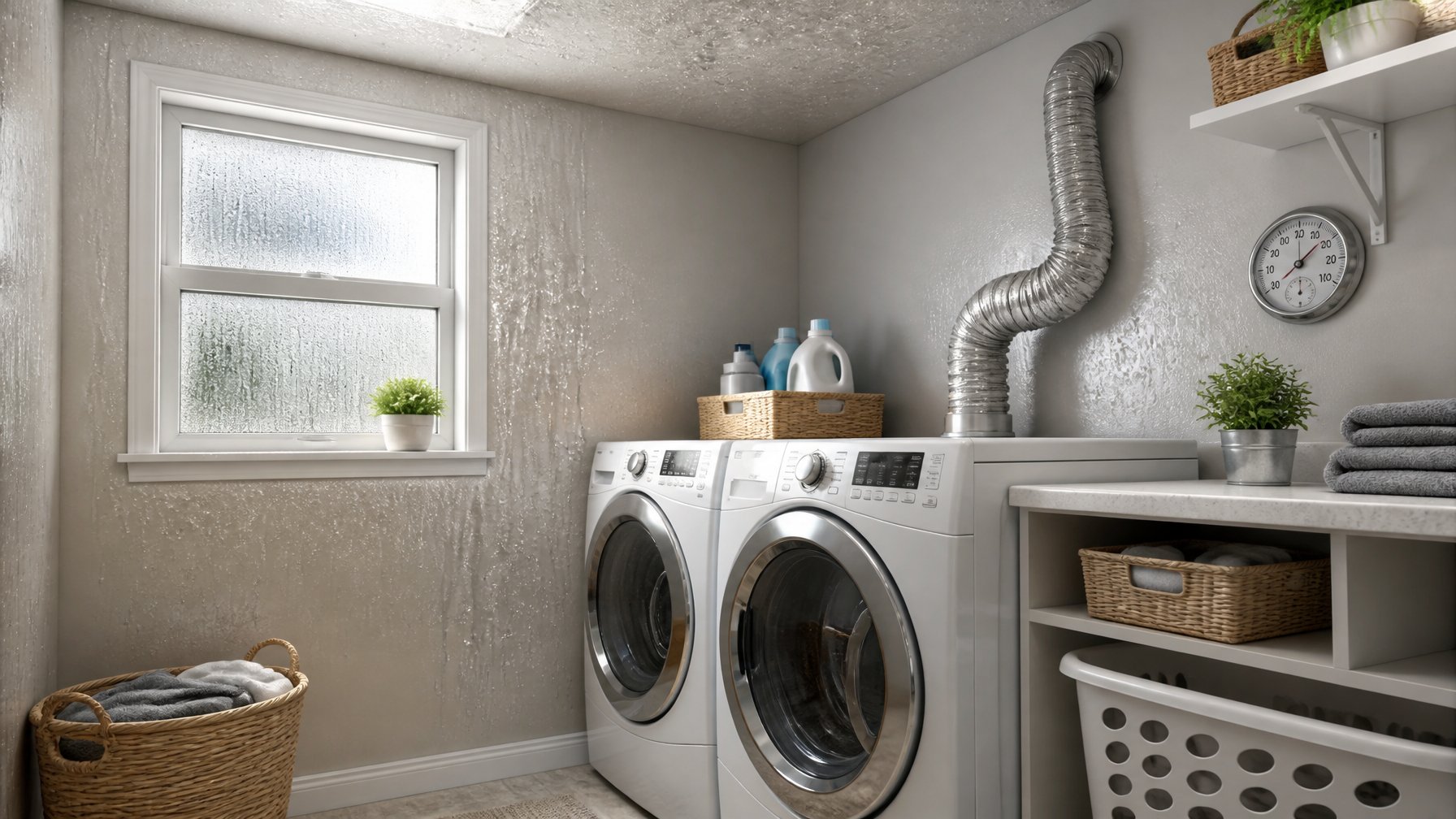
If the laundry room feels damp, shows water droplets on windows, or paint peels near the dryer, the vent might be blocked. They should compare humidity levels before and after a drying cycle and note if dampness lingers for hours.
Ask whether the dryer warms the room more than usual or if towels take longer to dry. They can trade off running a dehumidifier versus fixing the vent; a dehumidifier hides the problem but won’t clear the blockage.
Check the exterior vent hood for trapped lint and feel the airflow while the dryer runs. For help with vent repair or thorough cleaning, see dryer vent cleaning services.
9) Wall or ceiling stains near the vent path
Discolored patches, peeling paint, or damp spots along the dryer vent path often mean moisture is leaking from a blocked duct. Homeowners should compare the stain location to the vent route and check if stains appear after runs of the dryer or during rainy weather.
Ask whether the stain is new or getting worse. If it spreads upward or toward the dryer, that suggests trapped lint and moisture building pressure and escaping through gaps.
Weigh repair tradeoffs: cleaning the duct may stop new stains, but damaged drywall or insulation might need patching or replacement. For a professional clean or inspection, consult dryer vent cleaning services or visit the main service page for more information.